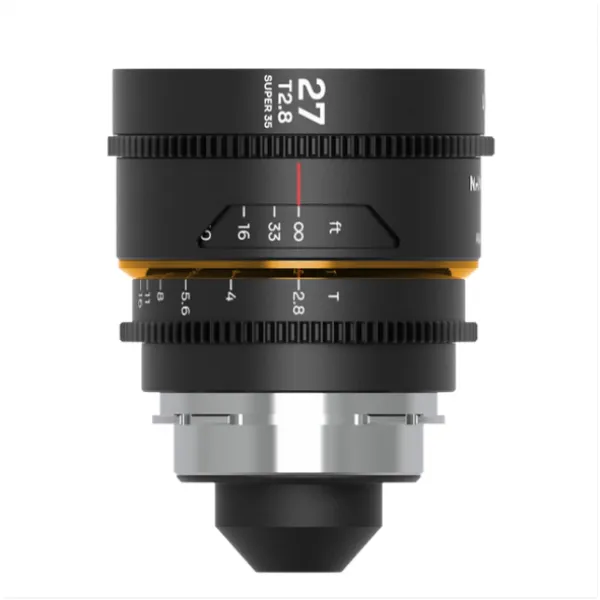
LAOWA 27mm T2.8 Ambra L Mount Cine
 LAOWA
LAOWAEAN:6940486703092
₦ 1,984,693.54
VAT Included
VAT Included
Available in 7 days
Laowa 27mm t/2.8 NanoMorph Amber L Mount Cine Lens - LWA27NA28LET
The anamorphic system allows videographers to obtain widescreen images from a standard recording medium, giving films a more cinematic look: an aspect ratio of 2.4:1 is achieved on a 16:9 sensor.
An alternative way to achieve this ratio is to crop the image, losing pixels.
Anamorphic lenses give the image characteristics such as edge flare and an oval bokeh.
They are always used on high-budget films.
- Patented anamorphic optical design
- Unprecedented compactness
- 1.5x constant anamorphic compression ratio
- Attractive oval bokeh
- Amber, blue, and silver flare options
- Short minimum focusing distance
- Professional cinema body
Patented anamorphic design
- Anamorphic lenses consist of spherical and cylindrical elements.
- In the optical design of some inexpensive anamorphic lenses, cylinders are added to the front and spherical elements are placed at the rear for focusing. This causes the anamorphic compression ratio to change when the focus point is changed, causing unwanted effects, such as actors' faces becoming wider when shot up close.
- Professional anamorphic lenses require a more substantial optical design, which leads to a very high cost. Furthermore, the size and weight of these lenses tend to be very important.
- In light of this, Laowa introduces its own anamorphic design to ensure a uniform anamorphic compression ratio and enable optical quality that solves the challenges of every anamorphic lens user.
Laowa repositions the lens element groups, which are arranged in [spherical glass + focusing system + cylindrical glass + spherical glass].
Group 1 and the focusing system compress the images, allowing for the use of smaller cylindrical blocks, making the lens smaller and more compact.
Furthermore, the image is formed and focused before the cylindrical blocks.
The images projected onto the cylinders remain the same, allowing for a constant anamorphic compression ratio even as the subject moves closer for closer focus.
The performance of the G1 section is crucial, as it acts as a complete single lens.
It converges the virtual image while suppressing aberration to a minimum.
Therefore, the G1 section requires meticulous optical design and exquisite craftsmanship, as any tolerance will lead to aberrations in the actual images.
Keeping the G1 section small is the other major challenge.
Unprecedented Compactness
The lenses weigh less than 400g each and are 10cm long.
Very useful for any setup, such as handheld, on a gimbal, tripod, slider, jib, or even a drone.
Not many anamorphic lenses can be lifted onto drones due to their weight.
Constant Anamorphic Compression Ratio
Constant anamorphic compression ratio across the entire focusing range prevents image shrinkage and stretching.
An anamorphic compression ratio of 1.5x is the perfect balance between size and anamorphic intensity.
With a 1.5x compression ratio, after decompression, you'll get a 2.66:1 aspect ratio on a 16:9 sensor.
This leaves some room to crop to a 2.4:1 widescreen aspect ratio. However, a 1.8x or 2x ratio would generate a 3.2:1 or 3.5:1 image, requiring further cropping to reach 2.4:1. Part of the image would be wasted.
Oval bokeh
The 1.5x compression ratio also produces oval bokeh, which gives an artistic touch to the image.
It also creates a soft, creamy background that makes the subject stand out.
The anamorphic system allows videographers to obtain widescreen images from a standard recording medium, giving films a more cinematic look: an aspect ratio of 2.4:1 is achieved on a 16:9 sensor.
An alternative way to achieve this ratio is to crop the image, losing pixels.
Anamorphic lenses give the image characteristics such as edge flare and an oval bokeh.
They are always used on high-budget films.
- Patented anamorphic optical design
- Unprecedented compactness
- 1.5x constant anamorphic compression ratio
- Attractive oval bokeh
- Amber, blue, and silver flare options
- Short minimum focusing distance
- Professional cinema body
Patented anamorphic design
- Anamorphic lenses consist of spherical and cylindrical elements.
- In the optical design of some inexpensive anamorphic lenses, cylinders are added to the front and spherical elements are placed at the rear for focusing. This causes the anamorphic compression ratio to change when the focus point is changed, causing unwanted effects, such as actors' faces becoming wider when shot up close.
- Professional anamorphic lenses require a more substantial optical design, which leads to a very high cost. Furthermore, the size and weight of these lenses tend to be very important.
- In light of this, Laowa introduces its own anamorphic design to ensure a uniform anamorphic compression ratio and enable optical quality that solves the challenges of every anamorphic lens user.
Laowa repositions the lens element groups, which are arranged in [spherical glass + focusing system + cylindrical glass + spherical glass].
Group 1 and the focusing system compress the images, allowing for the use of smaller cylindrical blocks, making the lens smaller and more compact.
Furthermore, the image is formed and focused before the cylindrical blocks.
The images projected onto the cylinders remain the same, allowing for a constant anamorphic compression ratio even as the subject moves closer for closer focus.
The performance of the G1 section is crucial, as it acts as a complete single lens.
It converges the virtual image while suppressing aberration to a minimum.
Therefore, the G1 section requires meticulous optical design and exquisite craftsmanship, as any tolerance will lead to aberrations in the actual images.
Keeping the G1 section small is the other major challenge.
Unprecedented Compactness
The lenses weigh less than 400g each and are 10cm long.
Very useful for any setup, such as handheld, on a gimbal, tripod, slider, jib, or even a drone.
Not many anamorphic lenses can be lifted onto drones due to their weight.
Constant Anamorphic Compression Ratio
Constant anamorphic compression ratio across the entire focusing range prevents image shrinkage and stretching.
An anamorphic compression ratio of 1.5x is the perfect balance between size and anamorphic intensity.
With a 1.5x compression ratio, after decompression, you'll get a 2.66:1 aspect ratio on a 16:9 sensor.
This leaves some room to crop to a 2.4:1 widescreen aspect ratio. However, a 1.8x or 2x ratio would generate a 3.2:1 or 3.5:1 image, requiring further cropping to reach 2.4:1. Part of the image would be wasted.
Oval bokeh
The 1.5x compression ratio also produces oval bokeh, which gives an artistic touch to the image.
It also creates a soft, creamy background that makes the subject stand out.